Unlocking Opportunities: A Comprehensive Guide to the L1 Visa Process
The L1 visa process provides an essential pathway for international firms looking for to transfer essential workers across boundaries. Understanding the subtleties of qualification standards, the distinctions between L-1A and L-1B visas, and the complexities of the application process can significantly influence an applicant's success. Nonetheless, maneuvering this facility landscape is not without its challenges, and cautious attention to documentation and employer sponsorship is essential. As we explore the crucial components of this procedure, the strategies for overcoming potential challenges will end up being evident, exposing exactly how notified preparation can open a world of possibilities.
Understanding the L1 Visa
Understanding the L1 visa requires acknowledging its relevance as a vital device for multinational firms looking for to transfer competent workers in between global offices. This non-immigrant visa classification helps with the activity of executives, supervisors, and specialized understanding employees to the USA, thus allowing organizations to maintain operational continuity and harness international skill effectively. The L1 visa is separated right into 2 main classifications: L-1A for managers and executives, and L-1B for staff members possessing specialized knowledge.The L1 visa serves a crucial function in enhancing a firm's one-upmanship in the international market - L1 Visa. By enabling firms to relocate their vital workers, organizations can ensure that essential tasks are taken care of by qualified individuals who are currently aware of the business's culture and functional procedures. This inner transfer mechanism not just cultivates knowledge sharing but likewise advertises technology and collaboration across borders.Moreover, the L1 visa is typically favored for its reasonably straightforward application process contrasted to various other visa categories, as it enables for twin intent, permitting holders to seek long-term residency while on a temporary copyright. This function makes the L1 visa specifically appealing for both employers and workers, as it enhances the pathway for knowledgeable specialists to develop long-term residency in the United States
Eligibility Requirements
Qualification for the L1 visa rests on numerous key standards that assure both the staff member and the employer satisfy specific qualifications. This non-immigrant visa is created for multinational companies to move employees from consular services to united state counterparts.Firstly, the employer needs to be a qualifying company, which includes a parent firm, branch, associate, or subsidiary of a united state organization. The company must have been doing company for at the very least one year both in the united state and abroad. This ensures that the company has sufficient functional stability and a legitimate presence.Secondly, the employee should hold a managerial, executive, or specialized knowledge setting. For L1A visas, the applicant has to show managerial or executive credentials, while L1B visas concentrate on specialized expertise related to the organization's items, solutions, or procedures. In addition, the staff member must have helped the foreign entity for at the very least one continual year within the last three years before their application.Lastly, the employee's duty in the U.S. need to align with their previous position, guaranteeing that their abilities and know-how are leveraged for the firm's advantage.
Kinds of L1 Visas
The L1 visa classification makes up two key types developed to assist in the transfer of workers within international companies: the L1A visa for supervisors and executives, and the L1B visa for staff members with specialized expertise. Each kind serves unique objectives and has certain eligibility criteria.The L1A visa is customized for people who hold managerial or executive settings within a firm. This visa makes it possible for top-level employees to transfer to an U.S. branch, subsidiary, or associate of the exact same company. Candidates for the L1A visa should demonstrate that they have been used in a managerial or executive capability for at least one continuous year within the previous three years prior to their application. Additionally, this visa supplies a much longer period of remain, originally approved for 3 years, with the possibility of expansions for as much as 7 years.In contrast, the L1B visa is planned for experts with specialized knowledge related to the company's products, services, or processes. To certify, applicants need to verify that their competence is essential to the company which they have actually benefited a minimum of one constant year within the last 3 years in a function that needed this specialized expertise. The L1B visa is initially granted for 3 years, with extensions offered for as much as 5 years.Both visa types are vital for business seeking to enhance their international operations by leveraging knowledgeable personnel, consequently advertising innovation and performance within the U.S. market.
Application Process
Steering via the L1 visa process involves a number of crucial actions that need to be meticulously followed to guarantee a successful end result. The procedure starts with the U.S. employer, who should initially establish qualification by showing a certifying relationship with the foreign entity and confirming that the employee meets the details needs for the L1 visa category being sought.Once qualification is validated, the employer starts the procedure by submitting Form I-129, the Petition for a Nonimmigrant Worker, with the U.S. Citizenship and Migration Provider (USCIS) This kind must be accompanied by a detailed summary of the task duties to be executed, the business structure of both the united state and international entities, and the worker's qualifications. It's important to verify that all information is accurate and complete, as noninclusions or errors can bring about hold-ups or denials.Upon authorization of the I-129 request, the following step entails the staff member getting the L1 visa at a united state consular office or consulate in their home country. This stage calls for the conclusion of Kind DS-160, the Online Nonimmigrant Visa, and scheduling an interview. Throughout the meeting, the applicant should offer proof supporting their credentials and the company's petition.After the visa is approved, the worker can get in the USA to function in the designated duty. On the whole, cautious preparation and adherence to each step of the application process are crucial for a successful L1 visa outcome.
Required Documentation

Essential Kinds Needed
Maneuvering the L1 Visa procedure calls for careful focus to the important kinds and documentation needed for a successful application. The key type needed is the Kind I-129, Request for a Nonimmigrant Employee, which should be finished and submitted by the united state employer. This type outlines the information of the work offer and the credentials of the employee looking for the L1 Visa.Alongside Kind I-129, the applicant will certainly need to total Type I-539 if coming with member of the family are additionally requesting visas. In addition, the company needs to give evidence of the certifying relationship in between the united state entity and the foreign entity, typically requiring the entry of business records such as articles of consolidation or financial statements.Moreover, it is necessary to consist of the L Classification Supplement to Form I-129, which defines the sort of L Visa being asked for-- either L-1A for supervisors and execs or L-1B for staff members with specialized expertise. Lastly, candidates should ensure that all types are authorized and dated suitably, as incomplete entries can result in hold-ups or denials. Properly constructing these crucial kinds lays the structure for a smoother L1 Visa procedure.

Supporting Evidence Requirements
Sustaining documents is vital for an effective L1 Visa, as it validates the cases made in the petition. Candidates must give an array of records to demonstrate qualification for the visa, which is categorized right into two key kinds: proof of the certifying connection between the U.S. and foreign entities and proof of the candidate's qualifications.To develop the partnership, candidates must send paperwork such as website company business charts, monetary statements, and evidence of ownership. These documents verify that the foreign firm has a certifying partnership with the united state employer, whether as a parent firm, subsidiary, branch, or affiliate.For the applicant's certifications, necessary records consist of an in-depth employment letter from the foreign company, laying out the candidate's work title, responsibilities, and duration of work. Additionally, educational qualifications, such as degrees and diplomas, must be given to verify the applicant's know-how in the pertinent field.
Employer Sponsorship Records
Common Difficulties
Maneuvering the L1 visa procedure offers numerous typical difficulties that applicants ought to be conscious of. Key problems frequently consist of stringent documentation requirements, potential hold-ups in processing times, and the necessity for rigorous lawful compliance. Recognizing these barriers can aid applicants better prepare and reduce risks during their visa trip.
Paperwork Requirements
The L1 visa procedure typically provides considerable difficulties connected to paperwork demands. Applicants have to provide substantial paperwork to establish eligibility, which can bring about confusion and possible hold-ups. Key documents consist of evidence of a qualifying partnership between the U.S. and international employer, proof of the candidate's employment history, and thorough info concerning the job function in the U.S.One common obstacle is gathering adequate evidence to demonstrate the nature of the certifying partnership. Firms typically struggle to existing clear business charts or monetary declarations that show the connection in between the entities. On top of that, making sure that letters of support from companies properly mirror the candidate's job obligations and qualifications is necessary, as obscure summaries can lead to denials.Another issue develops from the demand for detailed job descriptions that straighten with the L1 visa categories. Applicants have to articulate not just their present duty however additionally their supervisory or specialized understanding duties clearly. This necessitates a complete understanding of both the candidate's placement and the regulative language utilized in L1 visa.
Handling Dead Time
Experiencing delays in handling times is a common challenge encountered by L1 visa applicants, often leading to frustration and uncertainty. Several elements add to these hold-ups, consisting of high application quantities, enhanced scrutiny of applications, and administrative stockpiles within the united state Citizenship and Immigration Provider (USCIS) Applicants may locate that processing times can vary substantially depending upon the solution facility managing their application, as each center has its own work and efficiency levels. Additionally, the complexity of the candidate's situation, such as the need for considerable paperwork or information, can better extend wait times.In some instances, concerns connected to the applicant's present immigration standing or previous visa history might also cause additional hold-ups, as USCIS may require additional testimonial or details. It is essential for prospects to continue to be positive throughout this period, keeping open communication with their companies and lawful representatives to address any kind of potential concerns promptly.Understanding these handling time obstacles can assist L1 visa candidates get ready for feasible delays and reduce the influence on their change and occupation strategies. Perseverance and diligence are necessary merits in steering this intricate procedure.
Legal Compliance Issues
Several L1 visa applicants experience legal conformity concerns that can complicate their trip towards getting the visa. Comprehending and adhering to the particular laws established by the U.S. Citizenship and Immigration Services (USCIS) is crucial. Common difficulties consist of demonstrating the certifying connection between the international and united state companies, in addition to confirming that the applicant possesses the requisite specific expertise or managerial capacity.Additionally, applicants should give extensive documents describing their task duties, company structure, and economic practicality of the united state entity. Poor or imprecise paperwork can result in hold-ups or also rejections. Employers must additionally guarantee that they follow labor laws, consisting of wage and functioning problem requirements, which can affect visa eligibility.Another common concern entails preserving compliance with the regards to the visa as soon as provided. Changes in work status, work obligations, or firm framework can necessitate amendments to the visa, which if not addressed promptly can cause lawful issues. Therefore, remaining educated about conformity requirements and looking for legal advice when necessary is important to browse the complexities of the L1 visa procedure effectively.
Tips for Success
Success in the L1 visa procedure typically depends upon meticulous preparation and interest to detail. To enhance your opportunities of authorization, start by thoroughly comprehending the eligibility requirements for both the L1A and L1B visa groups. Evaluate whether your placement at the firm qualifies as supervisory, exec, or specialized expertise, as this classification especially affects your application.Next, collect substantial documents that confirms your insurance claims. This includes business graphes, in-depth work descriptions, and evidence of the firm's operational framework. Clear and succinct proof of the qualifying connection in between the united state entity and the foreign entity is essential. Validate that all papers are organized rationally and offered in a specialist way, as this shows your commitment and severity about the application.Engage the solutions of a knowledgeable migration attorney that specializes in L1 visas. Their knowledge can prove indispensable, leading you via facility laws and ensuring that all documents adheres to current laws. Furthermore, prepare for the meeting by practicing response to common inquiries and being all set to discuss your duty and payments to the firm comprehensive.
Often Asked Questions
Can Family Members Go Along With the L1 Visa Owner?
Yes, relative of L1 visa holders, consisting of partners and single kids under 21, can go along with the key visa owner. They may additionally get L2 visas, which allow them to stay in the USA.
For How Long Can I Remain on an L1 Visa?
The L1 visa enables preliminary remains of up to three years, with the opportunity of expansion. L1A visa owners may stay for an optimum of 7 years, while L1B visa owners can remain for 5 years.
Can L1 Visa Holders Make An Application For an Eco-friendly Card?
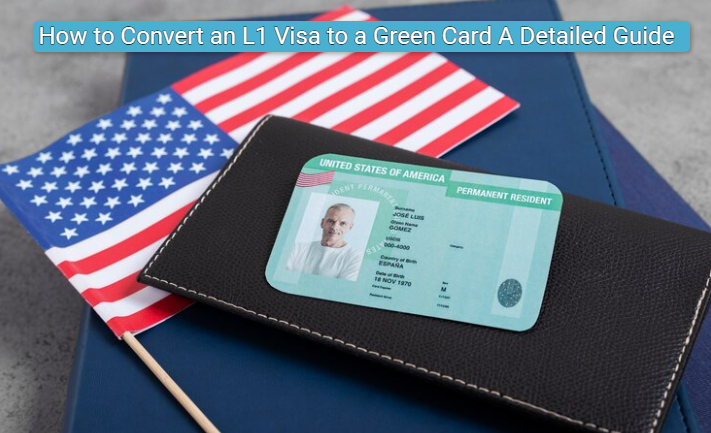
Yes, L1 visa owners can request a permit. L1 Visa Requirements. They may go after long-term residency via employment-based groups, generally calling for sponsorship from their employer, offered they satisfy the required certifications and documentation needs
What Occurs if My L1 Visa Is Denied?
If your L1 visa is denied, you may get a notice describing the reasons for rejection. You can seek to appeal the choice, reapply, or explore alternative visa alternatives based on your situations.
Exist Any Type Of Traveling Constraints With an L1 Visa?
An L1 visa usually permits global travel; nevertheless, re-entry to the united state rests upon keeping legitimate status. Tourists should guarantee conformity with visa conditions to stay clear of problems upon return
Verdict
Comments on “L1 Visa Info”